Table of Contents
A blue cow with a wide pale muzzle, little horns and scattered dark blueberry spots is the basis of this Blueberry Cow crochet pattern. Counted body rounds, separate animal parts and an intentional themed accent give the character its shape. Build the silhouette first, then check detail placement with pins. Finished size changes with yarn weight, hook size and tension.
Materials and US crochet abbreviations
Gather smooth DK yarn in blueberry blue, cream and navy, a hook that gives a dense fabric (often around 3 mm), light stuffing, a stitch marker, a yarn needle and embroidery thread. Make a small swatch: if filling shows through, try a smaller hook. Use matching yarn weights for the base and the accents.
US terms: sc = single crochet, ch = chain, sl st = slip stitch, hdc = half double crochet, inc = two single crochets in one stitch, and invisible dec = work the front loops of two stitches together. Work continuous rounds unless a part says to turn; numbers in parentheses give final round counts.
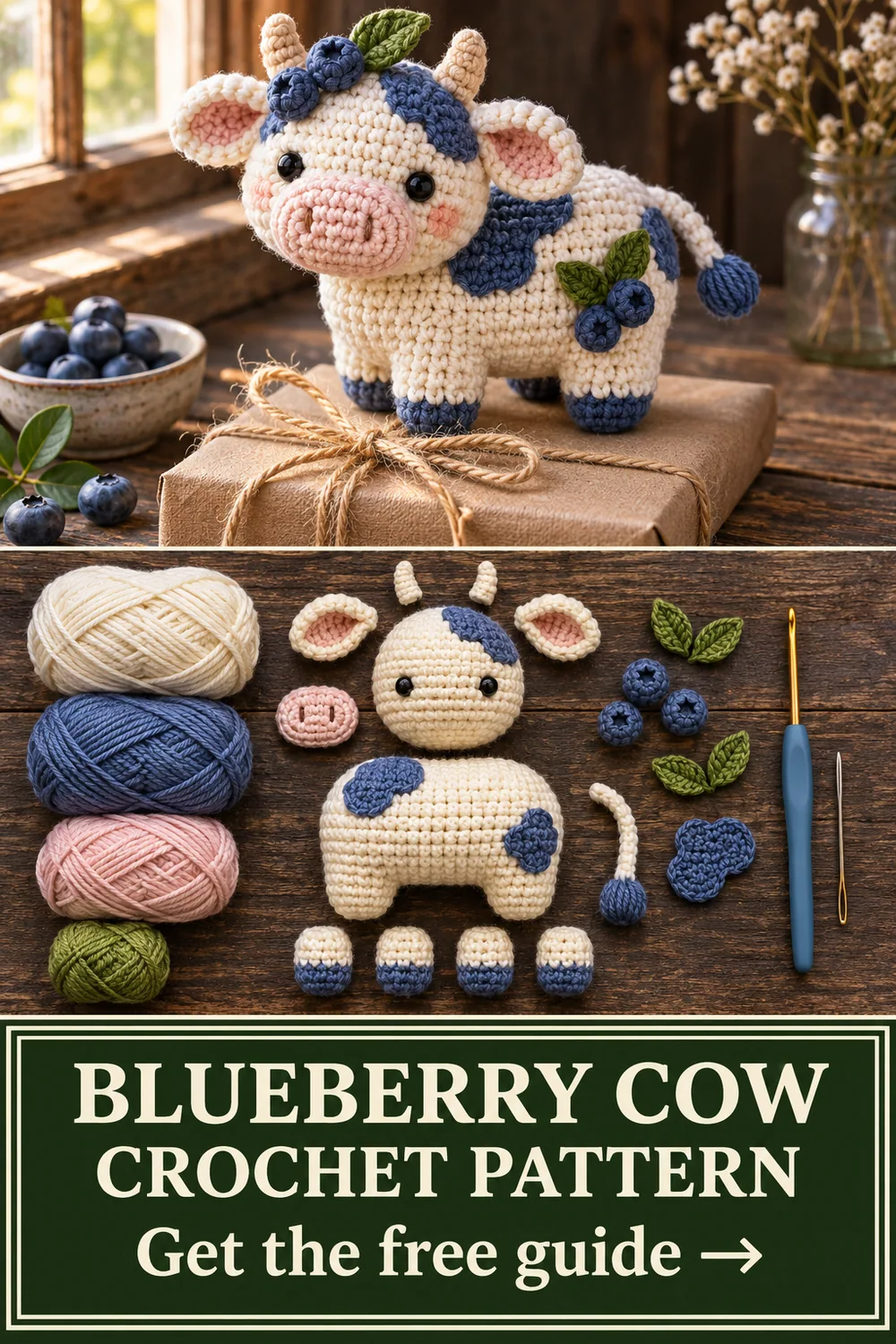
Crochet the main body
R1: 6 sc in a magic ring (6). R2: inc around (12). R3: [sc, inc] six times (18). R4: [2 sc, inc] six times (24). R5: [3 sc, inc] six times (30). R6: [4 sc, inc] six times (36). R7–12: sc around (36). R13: [4 sc, invisible dec] six times (30). R14: [3 sc, invisible dec] six times (24). R15: [2 sc, invisible dec] six times (18). R16: [sc, invisible dec] six times (12); stuff. R17: invisible dec six times (6); close.
Move your marker to the first stitch on every round and check each shaping count before proceeding. Add filling gradually while the opening is large enough to reach the corners. A small toy keeps its silhouette more clearly when the fabric is dense but the filling is not forced through the stitches.
Build the animal silhouette
Ears, make two: ch 6, sc across five chains, then two more rows of 5; fold bases. Horns: 4 sc in a ring, two even rounds at 4, then flatten. For four short legs, work 6 sc in a ring and two even rounds at 6.
Lay the pieces against the body and look at the shape from the front and side. Matching appendages should be equal length before sewing; rework a misplaced increase rather than stretching one part to match its partner.
Crochet the themed detail
Muzzle: work a cream circle of 6, 12 and 18 sc; embroider two nostrils. For berry spots, make four navy circles of 6 sc each and sew them apart on the back and sides.
This design combines a blue cow with a wide pale muzzle, little horns and scattered dark blueberry spots. Keep the accent secondary to the animal face: test its position with removable pins and compare it to the finished project image. Sew through full loops to make the detail secure.
Sew the parts and embroider the face
Sew the muzzle first, ears on the outside of the crown, horns between the ears and legs at four lower corners. Place the eyes just above the pale muzzle. Work through the body fabric instead of only catching the stuffing, change direction when weaving in ends and pull the seams just firm enough to hold the shape. Embroider eyes and other small features if the item will be handled by a child.
Fix a common shaping problem
If spots merge into a stripe, move two navy discs farther apart. Cream horns stand out better than blue ones. If a seam puckers, take out just the last few stitches and redistribute the filling before resewing. Recheck the front-facing silhouette after every attachment rather than hiding a problem under another accent.
Make a variant and care for the piece
Try indigo body yarn and lavender spots; retain a large cream muzzle for the cow face. A change of colour does not change stitch counts if the replacement yarn matches the weight and texture. Follow the yarn label for washing, spot-clean gently if needed and let the filled item dry completely before storage.
For a second hybrid idea, compare Cactus Cat and Mushroom Turtle. They use different animal silhouettes and accents.
Frequently asked questions
How many stitches shape the Blueberry Cow?
The main piece reaches 36 stitches at its widest point. Count each shaping round before sewing.
What detail makes this Blueberry Cow recognizable?
Muzzle: work a cream circle of 6, 12 and 18 sc; embroider two nostrils. Keep the animal outline visible when you attach it.
When should I attach the Blueberry Cow parts?
Sew the muzzle first, ears on the outside of the crown, horns between the ears and legs at four lower corners. Pin everything first and secure matching seams.
Can I recolor the Blueberry Cow?
Try indigo body yarn and lavender spots; retain a large cream muzzle for the cow face. Keep the same yarn weight and stitch counts.